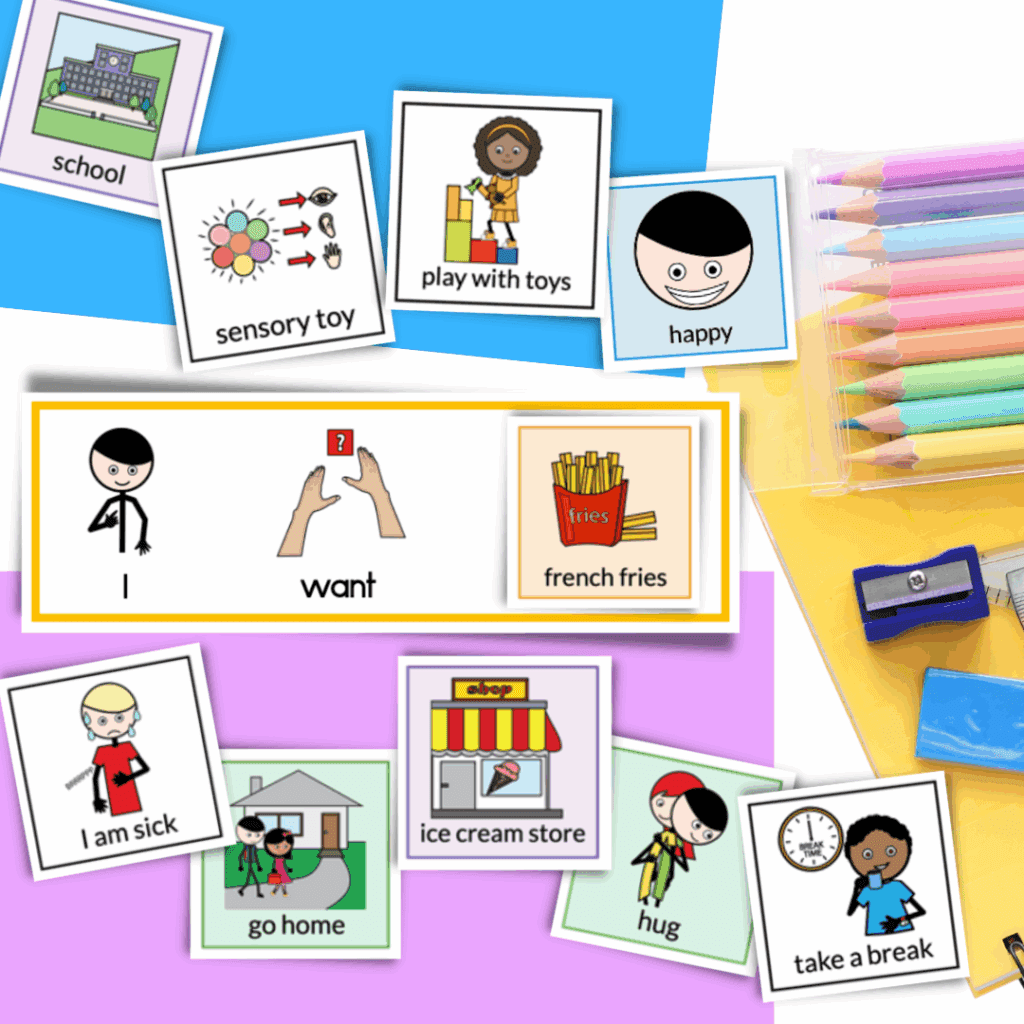
Many parents and educators hesitate to introduce picture exchange to children who are nonverbal or emerging communicators. A common worry is that using visual supports will stop a child from speaking verbally. This blog post explains why this concern is a myth and how visual supports like Picture Icons for Visual Communication AAC can actually encourage language development.
Common Myths About Picture Exchange
Myth 1: “Using pictures will stop my child from speaking.”
Visual supports do not replace speech—they provide a bridge to communication.
Myth 2: “Visuals are only for children who won’t learn to talk.”
Even children with emerging verbal skills benefit from structured visual supports to build confidence and independence.
Myth 3: “Once you start picture exchange, you can’t go back to verbal communication.”
Picture exchange is meant to complement verbal language, not block it. Many children transition naturally to spoken words alongside visuals.
The Truth About Visual Supports and Language Development
Picture exchange and AAC visuals scaffold learning by helping children:
- Understand concepts
- Sequence ideas
- Express wants and needs
Research shows that using visual supports alongside verbal modeling can increase the likelihood of verbal communication, rather than hinder it.
How Picture Icons Can Support Communication Without Replacing Speech
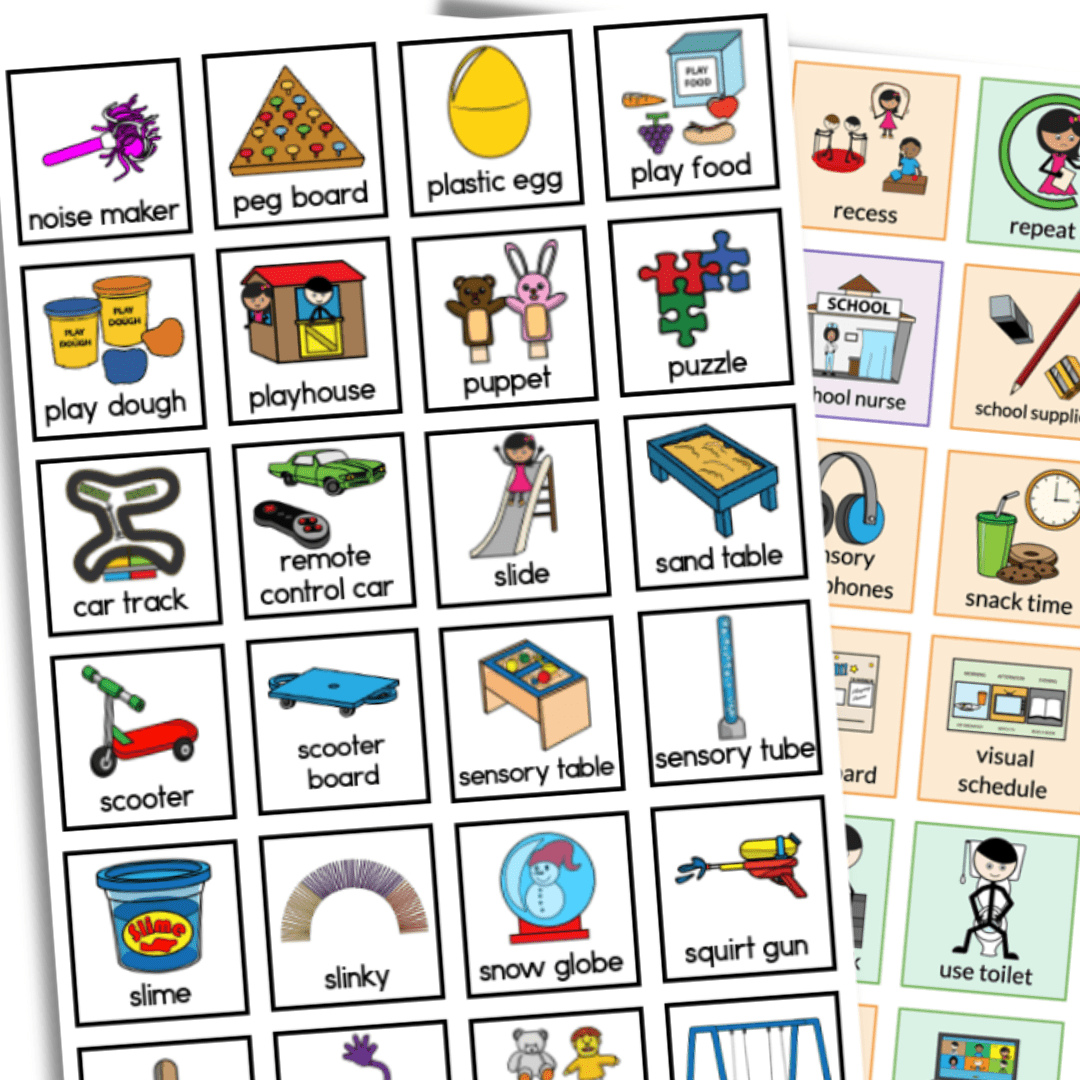
Our Picture Icons for Visual Communication AAC resource includes:
- Over 550 editable visual icons across core categories like food, emotions, actions, and places
- Pre-built and blank sentence strips to scaffold longer sentences
- Color-coded visuals to support independent navigation
Parents and educators can pair each icon with verbal prompts, gradually encouraging the child to use spoken words alongside their visual communication. For example, when a child selects the “I want drink” icon, model the verbal phrase “I want a drink”. Over time, this encourages speech while still providing a reliable communication method.
Tips for Parents and Educators
- Start small: Introduce a few key icons from our Picture Icons pack at a time.
- Pair icons with verbal models: Say the word aloud as your child selects the icon.
- Encourage imitation: Celebrate any verbal attempts or gestures.
- Expand vocabulary gradually: Add new icons and sentence strips over time.
Featured Resource
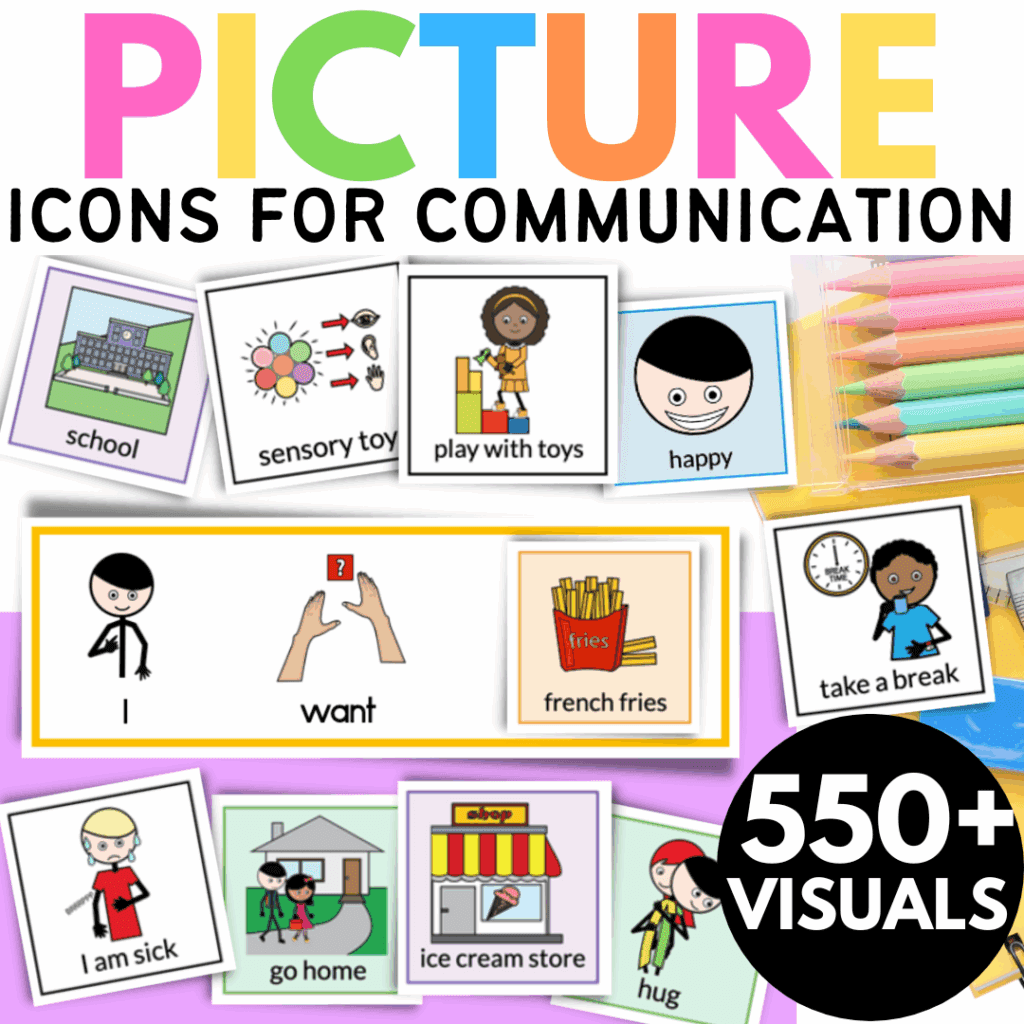
Ready to support your child or student’s communication skills? Our Picture Icons for Visual Communication AAC resource includes:
- 550+ editable icons across core categories
- Pre-built and blank sentence strips
- Color-coded visuals for easy navigation
This resource is ideal for home, classroom, or therapy settings and provides flexible, evidence-based support for nonverbal and pre-verbal learners.